It’s one of the most common hesitations we hear from customers considering a move away from carpet: “won’t hard flooring be really noisy?” It’s a fair question. Anyone who’s walked across an old, poorly installed timber or laminate floor and heard every footstep echo through the house understands the concern.
The good news is that modern hard flooring offers more acoustic comfort than many people expect. Noise isn’t an unavoidable side effect of choosing hybrid, vinyl, laminate, timber or tile. It’s something that can be actively managed and significantly reduced, when the right material, underlay and installation method are chosen together. Here’s what actually determines how much sound your floor produces, and how to get the clean, modern look of hard flooring without the noise you might be picturing.
What Actually Determines Floor Noise?
There’s a common misconception that noise is simply a fixed property of a flooring type, that timber is “loud” and carpet is “quiet,” full stop. In reality, the amount of sound a floor produces depends on several interacting factors, and getting any one of them wrong can undo the benefits of getting the others right.
The Flooring Material
Different hard flooring materials absorb and reflect sound differently. Hybrid flooring, vinyl, laminate, timber and tile each have their own acoustic characteristics, shaped by their density, thickness and surface composition. Denser, more rigid materials like tile tend to reflect more sound, while flooring with a degree of flex or a softer core, such as many hybrid and vinyl products, can absorb some impact noise before it travels further into the room or through to the floor below.
This doesn’t mean one material is automatically “quiet” and another automatically “noisy.” It means the material is one variable in a bigger equation, and it should be considered alongside the underlay and installation method rather than in isolation.
The Underlay
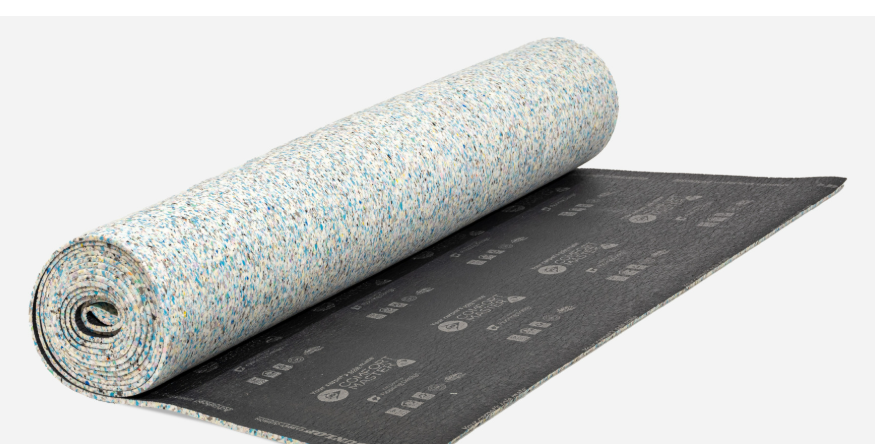
If there’s one factor that makes the single biggest difference to acoustic comfort, it’s the underlay. A quality acoustic underlay can significantly reduce impact noise, the sharp sound of footsteps, dropped objects or dragged furniture, while also improving comfort underfoot.
Acoustic underlays are purpose-built to absorb vibration and sound energy before it can travel through the floor structure. This matters both for comfort within the room itself and, importantly, for reducing noise transfer to rooms below, a particular consideration in multi-storey homes, apartments and townhouses. Skimping on underlay to save a small amount upfront is one of the most common reasons homeowners end up disappointed with the acoustic performance of an otherwise good-quality floor.
The Installation Method
How a floor is installed has a real impact on its sound characteristics. Floating floors, where planks or boards are connected to each other but not fixed directly to the subfloor, tend to allow a slight amount of movement that can affect how sound resonates. Direct-stick installations, where flooring is adhered firmly to the subfloor, produce a different acoustic profile again.
Neither method is universally quieter. The right choice depends on the flooring product itself, the subfloor, and the acoustic underlay being used alongside it. This is exactly why it pays to get advice tailored to your specific home and product combination, rather than assuming one installation approach will automatically deliver a quiet result.
Your Home Itself
Even with the best flooring, underlay and installation combination, the acoustics of a room are also shaped by the space around the floor. Soft furnishings such as rugs, curtains and upholstered furniture all help absorb sound, softening echo and reducing the sense of noise within a room. Large, open-plan spaces with predominantly hard surfaces, big windows, minimal furnishings, high ceilings, naturally create more echo and amplify sound simply due to the way sound waves bounce around with fewer soft surfaces to absorb them.
This means two homes with the exact same flooring product installed can have noticeably different acoustic experiences, depending on layout, furnishing and room size. It’s worth factoring this into your expectations when planning a flooring change.
Choosing Flooring With Acoustic Performance in Mind
If reducing noise is genuinely important to you, whether because of a young family, apartment living, home office needs, or simply personal preference, there are flooring options specifically designed with acoustic performance in mind. These products are typically engineered with acoustic-backed layers or are paired with acoustic underlay systems designed to work together as a complete solution, rather than treating the flooring and underlay as separate afterthoughts.
The right combination of flooring and underlay can make a noticeable difference, giving you the clean, contemporary look of hard flooring without the excessive noise that older or poorly matched installations are sometimes associated with. This is genuinely achievable with today’s flooring technology, it simply requires choosing the right combination for your specific home and lifestyle, rather than assuming all hard flooring behaves the same way.
Practical Tips for a Quieter Hard Floor
- Never treat underlay as optional. It’s consistently the single biggest lever for acoustic comfort, more influential than the flooring material choice alone.
- Ask about acoustic-rated products if noise reduction is a priority, particularly for upper-storey rooms, apartments or townhouses with shared walls or floors.
- Factor in your room’s furnishings. Rugs, curtains and upholstered furniture aren’t just decorative, they play a genuine role in softening sound within a space.
- Consider installation method alongside material. The best acoustic outcome comes from matching flooring, underlay and installation method together, not choosing each independently.
- Get advice for your specific home. Subfloor type, room size and household needs all affect the ideal combination, so a tailored recommendation will always outperform a generic one.
Frequently Asked Questions
Is hard flooring always noisier than carpet? Not necessarily. While carpet naturally absorbs more sound due to its soft fibre structure, modern hard flooring paired with a quality acoustic underlay and appropriate installation method can significantly reduce noise, offering a quieter result than many people expect.
What is the best underlay for reducing noise under hard flooring? A quality acoustic underlay, specifically designed to absorb impact noise and vibration, makes the biggest difference to acoustic comfort. The most suitable option depends on the flooring product and subfloor, so it’s worth getting tailored advice.
Does the installation method affect how noisy a floor is? Yes. Floating floor installations and direct-stick installations produce different sound characteristics. The best method for acoustic comfort depends on the specific flooring product and underlay being used together.
Can I make an existing hard floor quieter? Adding soft furnishings such as rugs, curtains and upholstered furniture can help absorb sound and reduce echo in a room with existing hard flooring, even without replacing the floor itself.
Is hybrid or vinyl flooring quieter than laminate or timber? Acoustic performance varies by product rather than strictly by category, since density, core composition and backing all play a role. The most reliable way to compare is to ask about the specific acoustic ratings or underlay pairing for each product you’re considering.
Find Your Quiet, Hard-Wearing Floor
Acoustic comfort doesn’t mean compromising on the durability, style or easy-care benefits that make hard flooring so popular. It simply means choosing the right combination of material, underlay and installation for your home.
Visit your local Flooring Design store and discover the flooring options designed for the way you live. Our team can talk you through acoustic-rated products, recommend the right underlay for your subfloor and household, and help you find a floor that looks fantastic and feels genuinely comfortable, both underfoot and to the ear.