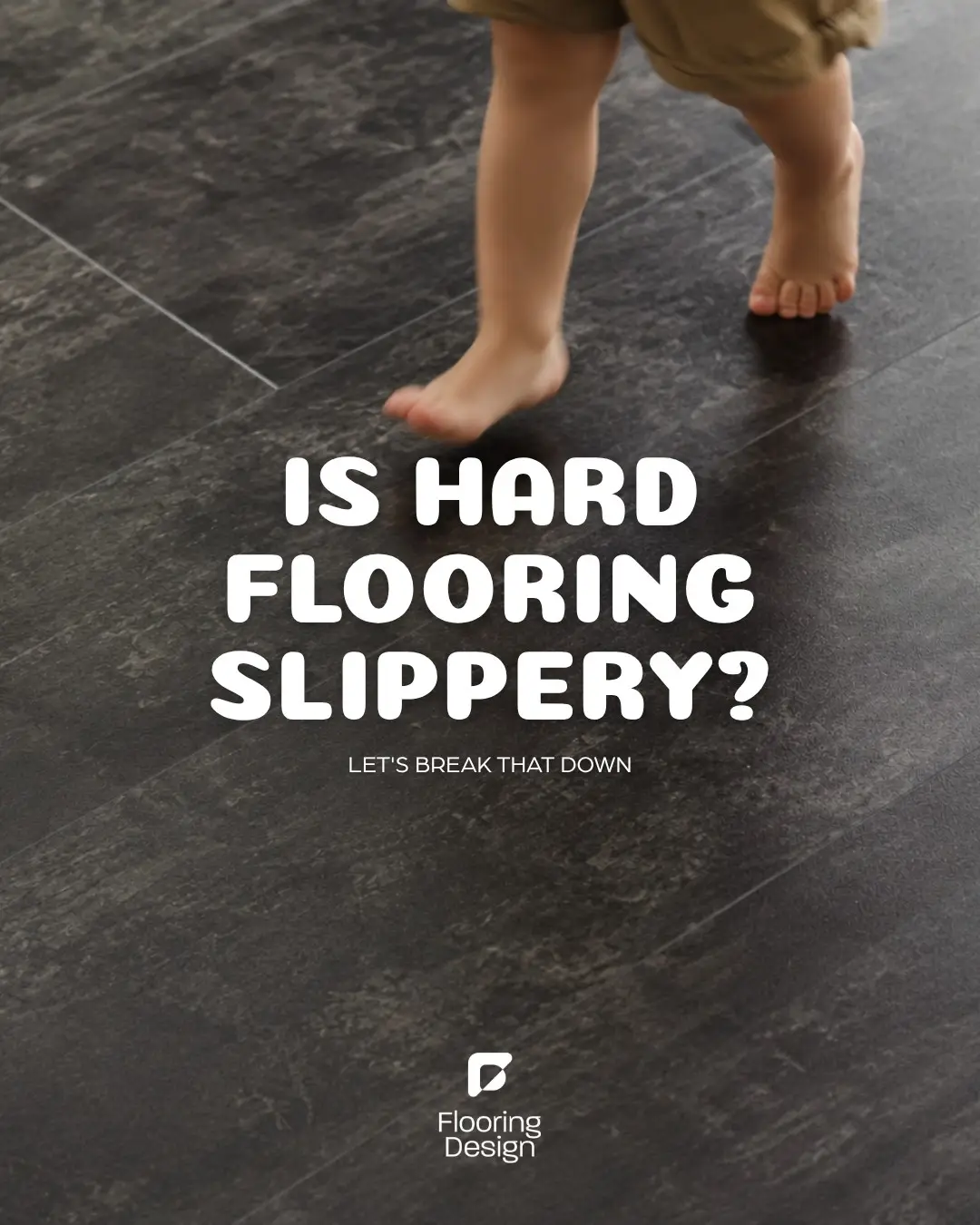
“Isn’t hard flooring slippery?” It’s one of the biggest misconceptions about hard flooring, and it’s a question we hear regularly from homeowners weighing up a move away from carpet. It’s also a question with a more nuanced answer than a simple yes or no.
The truth is that slip resistance isn’t a fixed property of hard flooring as a category. It depends on several factors working together, the material itself, the surface finish, whether the floor is wet or dry, and where in the home it’s being installed. Understanding these factors is the key to choosing a floor that looks great and gives you genuine confidence underfoot, wherever it’s installed.
Why Slip Resistance Isn’t a Simple Yes or No
It’s easy to assume that “hard flooring” behaves as one uniform category, smooth, hard and inherently more slippery than carpet. In reality, slip resistance varies enormously between products, finishes and conditions. A textured, matte-finished tile in a bathroom and a high-gloss polished timber look in a hallway can have very different grip characteristics, despite both technically falling under the umbrella of “hard flooring.”
This is why the right question isn’t “is hard flooring slippery?” but rather “which hard flooring product, finish and location combination gives me the safety I need?” Once the variables are broken down individually, the picture becomes much clearer.
The Factors That Determine Slip Resistance
The Material
Timber, laminate, vinyl and tile all perform differently when it comes to underfoot grip. Each material has its own natural surface texture and density, which affects how much traction it provides. This doesn’t mean one material is universally safer than another, performance varies significantly within each category depending on the specific product, its finish and its intended use. A well-designed vinyl or laminate product, for example, can offer excellent grip, while a poorly suited timber-look product in the wrong finish may not.
The Surface Finish
Surface finish is one of the most influential factors in slip resistance, often more so than the base material itself. Matte or textured finishes generally provide more grip than smooth, polished surfaces, because the texture creates more contact points for a shoe or bare foot to grip onto. Highly polished, glossy finishes can look stunning and are popular for their sleek, contemporary appearance, but they typically offer less inherent grip, particularly once any moisture is introduced.
This is an important consideration when balancing aesthetics with practicality. A high-gloss finish might be the perfect look for a formal living area, while a matte or textured finish may be the smarter, safer choice for busier, higher-risk areas of the home.
Whether the Floor Is Wet or Dry
Even the most slip-resistant floor on the market can become slippery when water, oil or soap is present. Slip ratings and grip performance are typically tested and rated for both wet and dry conditions, and it’s the wet performance that matters most in areas prone to moisture. A floor that feels perfectly secure underfoot when dry can behave very differently the moment it’s exposed to a spill, condensation or tracked-in water.
This is precisely why the rooms most associated with moisture, bathrooms, laundries, kitchens and entryways, deserve particular attention when choosing a flooring product, regardless of how confident that product feels in a showroom’s dry, controlled environment.
Where It’s Installed
Slip resistance requirements genuinely differ depending on where in the home a floor is going. A bathroom, laundry or entryway may require a different flooring choice than a bedroom or living area, simply because the risk profile of each space is different. Bathrooms and laundries regularly encounter water. Entryways deal with rain, mud and tracked-in moisture, particularly during Hawke’s Bay’s wetter months. Bedrooms and living areas, by contrast, are generally dry, lower-risk environments where aesthetics can often take a higher priority relative to slip performance.
Choosing flooring room by room, rather than selecting one product for the whole home, is often the smarter approach when safety is a genuine consideration.
How Slip Resistance Is Actually Measured
Many modern hard flooring products are independently tested for slip resistance, giving homeowners an objective way to compare products rather than relying on how a floor merely looks or feels in a showroom. These tests typically assess how much grip a surface provides under controlled conditions, including wet-surface testing, and result in a slip rating that can be used to compare products directly.
Understanding and asking about these ratings helps you choose a floor that’s genuinely suitable for the way your family lives, rather than making a decision based on appearance alone. This is particularly valuable for households with young children, older family members, or anyone for whom underfoot confidence is a higher priority.
Balancing Style, Durability and Safety
None of this means safety has to come at the expense of style. Flooring manufacturers understand that slip resistance is a genuine priority for many households, and there’s now a wide range of products that combine attractive, contemporary finishes with strong grip performance, even in wet-prone areas like bathrooms and laundries.
The goal isn’t necessarily choosing the single “safest” product available and compromising on everything else. It’s finding the right product for each specific space in your home, one that offers the appropriate level of slip resistance for that room’s conditions while still delivering the style, durability and easy maintenance you’re looking for.
Practical Tips for Choosing a Safe Hard Floor
- Ask about slip ratings directly, particularly for bathrooms, laundries, kitchens and entryways, rather than assuming all hard flooring performs the same.
- Favour matte or textured finishes in higher-risk, moisture-prone areas, and reserve high-gloss finishes for drier, lower-traffic spaces.
- Think room by room, rather than choosing one flooring product for the entire home regardless of location or moisture exposure.
- Factor in your household, homes with young children, older family members or anyone with mobility considerations may benefit from prioritising grip performance more heavily.
- Don’t judge by dry-showroom feel alone. A floor’s dry performance can be very different from its wet performance, so ask specifically about wet slip ratings.
Frequently Asked Questions
Is hard flooring generally more slippery than carpet? Not necessarily. Slip resistance depends on the specific material, surface finish and conditions rather than the flooring category as a whole. Many hard flooring products are independently tested and rated for grip performance, including in wet conditions.
Which hard flooring finish is safest for bathrooms? Matte or textured finishes generally provide more grip than smooth, polished finishes, making them a stronger choice for bathrooms, laundries and other moisture-prone areas.
Does a slip-resistant floor still get slippery when wet? Yes. Even the most slip-resistant flooring can become slippery when water, oil or soap is present. This is why wet-condition slip ratings are particularly important for bathrooms, laundries, kitchens and entryways.
Do I need different flooring for different rooms for safety reasons? Often, yes. A bathroom, laundry or entryway typically has a higher moisture exposure than a bedroom or living area, so choosing flooring based on each room’s specific conditions is generally a smarter approach than using one product throughout the home.
How do I know a flooring product’s slip rating? Many modern hard flooring products are independently tested for slip resistance. Ask your flooring specialist about the specific rating for any product you’re considering, particularly for wet or high-risk areas of your home.
Get Confident, Informed Advice In-Store
If safety is a priority for your household, don’t leave it to guesswork. Visit your local Flooring Design store and ask our team about slip ratings and which flooring options are best suited to each room in your home. The right product can offer the perfect balance of style, durability and confidence underfoot, so you don’t have to choose between how your floor looks and how safe it feels.